

I’ve been doing this work for close to twenty years now.
Helping companies make sense of their data and marketing technology, guiding selections, fixing what doesn’t work, occasionally building something in between. It’s been a fairly consistent thread.
And recently… I found myself staring at it all thinking:
“I’m not entirely sure where I’d start anymore.”
That’s not something I say lightly.
It has been half a year since the State of Martech 2026 edition was published. It included a staggering 15,000+ tools.
Fifteen thousand.
At that point, it stops being a catalogue. It becomes something else entirely.
It reminded me of a city like London.
A city with thousands of streets, constantly evolving, expanding, rerouting. No one expects you to know every street. No one expects you to memorise every turn.
So why do we expect teams to understand a landscape with more than 15,000 tools?
The default reaction is predictable.
“We’ll do our research.”
Open a few tabs. Read some reports. Book a few vendor demos. Maybe bring in a shortlist. Compare capabilities. Build a case.
It sounds reasonable. Structured, even.
But what I see in practice looks very different.
Ten tabs become fifty. Terminology starts blending together. Composable, CDP, AI, real-time, warehouse-native, zero-copy. I know that I am preaching to the choir here.
Each vendor tells a compelling story. Each one sounds like the right direction, especially when you listen long enough. At some point, it stops being exploration. It becomes noise.
The problem isn’t a lack of information. There’s more information than anyone can reasonably process.
The real challenges reveal themselves when that information needs to turn into a decision.
This is where the city metaphor starts to hold.
Imagine navigating a city like London.
You have a few options.
You follow GPS. You rely on memory. You recognise patterns from places you’ve been before.
All of them work. Until they don’t.
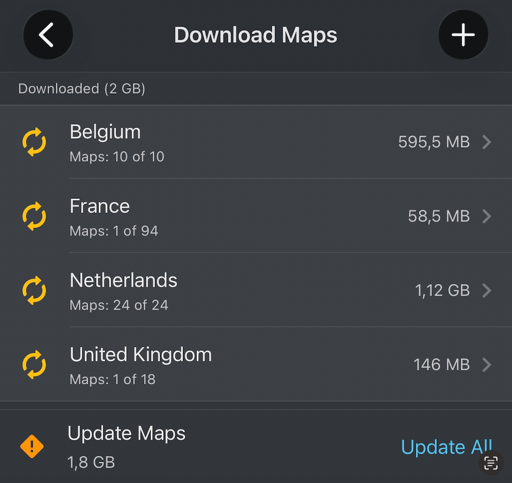
GPS can be outdated or overly optimistic. Memory only works if the city hasn’t changed. Pattern recognition can trick you into thinking you’ve been here before.
And the city keeps changing while you’re moving through it.
New roads. Roadworks. Closures. Detours.
Even people who know the city well still check a map.
Not because they’re lost, but because the environment isn’t static.
That’s what Martech feels like right now. Not just large, but constantly shifting.
When I look at the clients I’ve worked with recently, there’s a pattern that repeats itself more often than not.
It usually starts with a vague discomfort.
Something isn’t working. The stack isn’t delivering what it was supposed to. Capabilities feel limited, or disconnected. Or a manager keeps dropping the term AI in every discussion.
That’s the moment where exploration begins. And this is where things accelerate quickly.
Teams start reading. Vendors get involved. New concepts enter the conversation. AI shows up in every corner. Composable suddenly becomes a topic, often without a shared understanding of what it actually means in their context.
At this point, most teams hit a fork in the road.
Sometimes they decide to do nothing. Stick with what they have, because the alternative feels too uncertain.
Sometimes they move forward, but under pressure. The best story wins. The clearest narrative wins. Not necessarily the best fit.
And sometimes they move quickly, at an exhaustive pace, without bringing the right people into the conversation. Marketing, data, IT, procurement, all slightly out of sync, each looking at a different part of the map.
The outcome is rarely clean.
More often, it leads to another layer of complexity.
It’s tempting to frame this as a knowledge problem.
If we just understood the tools better, if we just had more clarity on what’s out there, things would improve.
But that doesn’t fully capture it.
It starts as a knowledge problem.
It quickly becomes a decision problem.
Or maybe more accurately, a shared understanding problem.
I’m heading to AntiCon in London soon.
A room full of smart people, strong opinions, and a lot of energy around AI, data, and transformation.
I’m looking forward to it.
But I’m not going there to learn what’s new.
There’s no shortage of “new”.
I’m going to understand why, despite all of this progress, it still feels so hard for teams to navigate.
Because that’s the part that doesn’t get enough attention.
Even experienced people don’t have the full picture.
We all rely on tools, frameworks, vendor narratives, peer input. We build partial maps and try to move forward with them.
And that’s fine.
It’s probably unavoidable.
Which also means the goal isn’t to know everything.
It’s to make better decisions with incomplete information.
To understand which streets are worth taking, and which ones you can safely ignore.
To recognise when you’re being rerouted, and whether that actually gets you closer to where you want to go. Where the number of options stops being helpful and starts getting in the way.
There’s probably a simpler way to approach that.
I’ll share more on that soon.
Do you have any questions after reading this article?
Or need support with your Martech projects?
Discussion