
Skip to Content

Latest Posts

Featured

Why you haven’t heard from me lately, and why Martech Stack Builder v0.9 needs you

Why you haven’t heard from me lately, and why Martech Stack Builder v0.9 needs you

I’ve been quieter than usual lately. No podcasts, fewer articles. Not because I ran out of things to say, but because I was head-down building something that refused to stay small. Stack Builder v0.9 is the first moment where it makes sense to invite others in, before calling anything finished.

I’ve been quieter than usual lately.

No podcasts. No long articles. No hot takes. That wasn’t a content strategy. It was a side effect of being completely head-down building something that refused to stay small.

Alongside my client work, I’ve been spending most of my free headspace on Martech Stack Builder. What started as a lightweight visual tool quickly turned into something heavier, more opinionated, and frankly more demanding than I expected. Writing about it too early felt wrong. The product itself wasn’t stable enough yet, and I didn’t want to narrate something that was

Why you haven’t heard from me lately, and why Martech Stack Builder v0.9 needs you Read More

I didn’t plan to build a Martech product business, but here we are

I didn’t plan to build a Martech product business, but here we are

What began as an experiment turned into real, deployed Martech. AI made micro viable, but not automatic. Generalist experience, security awareness, and relentless QA mattered more than tools. It’s disciplined systems work, just faster.

What started as a side exercise, mostly curiosity-driven, has quietly turned into a real line of business. Today, roughly twenty percent of my revenue comes from building small, focused Martech tools. Not prototypes. Not demos. Actual, deployed, and maintained software.

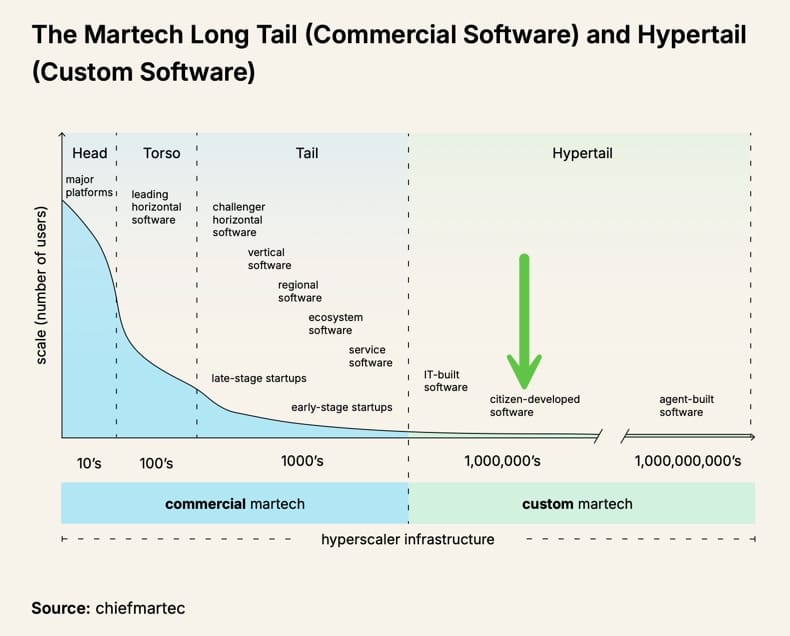
That alone would have surprised me a year ago, even when Chiefmartec's Scott Brinker and Frans Riemersma shared their Hypertail 'micro SaaS' vision in their State of Martech 2025 report.

When CDP work runs into reality

About nine months ago, a client approached me for something familiar: help selecting and setting up a Customer Data Platform. This is still

I didn’t plan to build a Martech product business, but here we are Read More

Why AI strategy fails for the same reason data strategy did

Why AI strategy fails for the same reason data strategy did

Tiankai Feng on the human behaviors that determine whether your AI implementation accelerates dysfunction or actually solves problems.

Tiankai Feng has been doing a publication tour for his new book, Humanizing AI Strategy, and he noticed something odd about the conference circuit. He keeps getting invited specifically because he talks about the human side of AI, which apparently makes him an outlier. Everyone else is presenting on architecture, model comparisons, and technical capabilities.

This feels like a replay of what happened with data strategy about five years ago. Companies invested in platforms and governance frameworks while assuming the technology itself would solve their problems. It didn't. Most data strategy failures traced back to human behavior, organizational dysfunction, poor

Why AI strategy fails for the same reason data strategy did Read More

An open letter to Martech vendors: let's do better

An open letter to Martech vendors: let's do better

Vendors, buyers don’t want theatre anymore. They want honesty, focus, and fewer ego-driven detours. After a year of back-channel Slack messages and mid-demo rescues, here’s my open letter for a more grown-up Martech industry in 2026.

As 2025 winds down, I’ve been thinking about all the demos I sat through this year. Probably more than any reasonable person should. And at some point you start to recognise patterns that you wish you didn’t recognise. Patterns that make buyers question their presence in the demo, glaze over, or quietly message me on Slack asking, “Did they really just say that?”

A meme floated past my LinkedIn feed a little over two weeks ago, joking that traditional platforms “lie”. And a screenshot sent by an industry peer from a presentation in which the vendor told the

An open letter to Martech vendors: let's do better Read More

Meet the CDP Simulator, the easiest way to finally understand your data stack

Meet the CDP Simulator, the easiest way to finally understand your data stack

The CDP Simulator is a free, interactive way to see how customer data actually moves through traditional, composable, and hybrid stacks. Click, explore, and watch the architecture come alive without needing a single slide.

I’ve lost count of the number of times I’ve tried to explain a CDP diagram that looked like someone spilled spaghetti on a slide. If you’ve ever been in a meeting where five people are discussing “real time” and each one means something completely different, you probably know the feeling.

So instead of drawing yet another arrow-filled diagram, I built something people can actually play with.

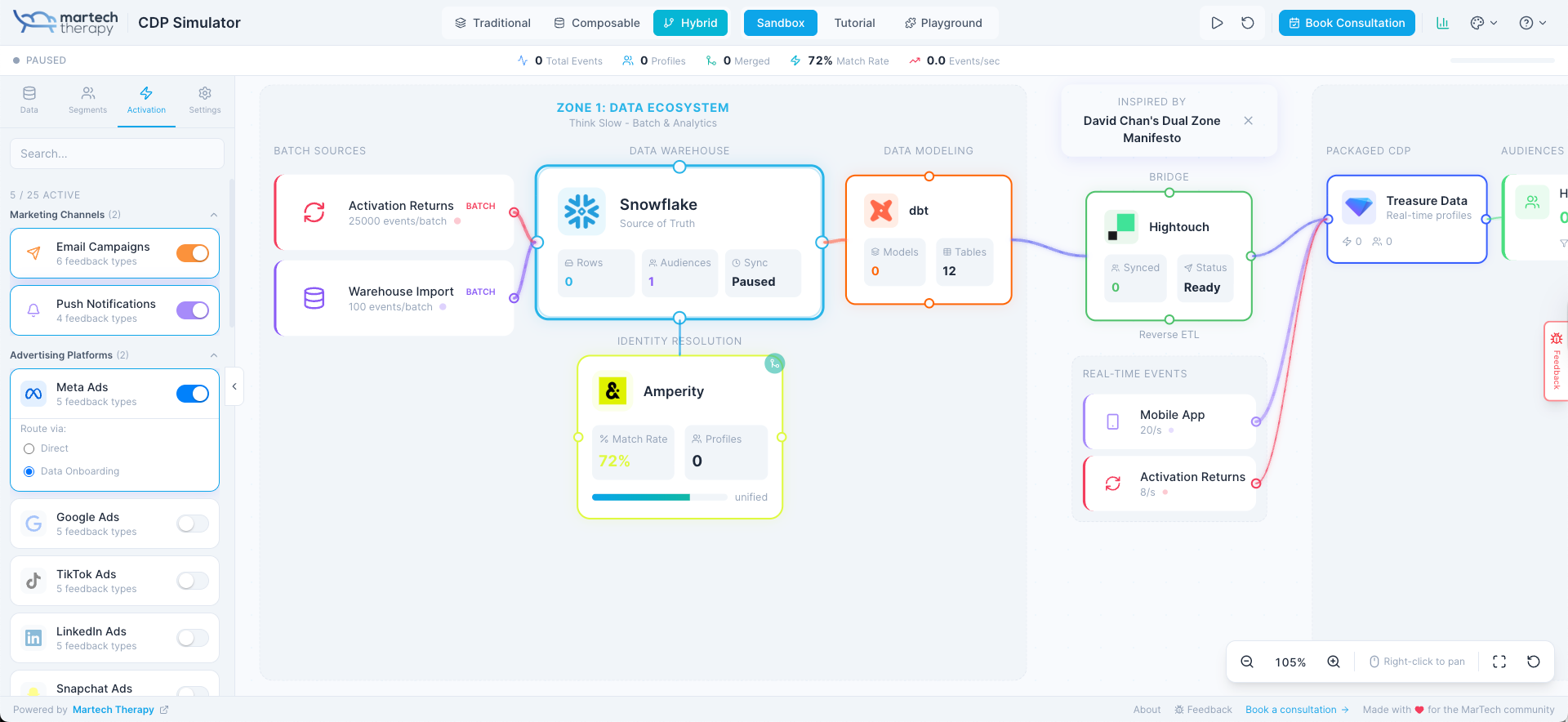
CDP Simulator displaying David Chan's inspired Hybrid architecture.

The CDP Simulator is now live. It’s free, and you can get started in about three seconds. No signup, no marketing pop-up

Meet the CDP Simulator, the easiest way to finally understand your data stack Read More

When AI replaces processes, not people

When AI replaces processes, not people

A conversation with Paul Meinshausen and Duarte Garrido about the mental models teams struggle with when adaptive systems replace rule-based workflows. Most marketers aren't ready for this shift yet.

I set up this conversation with Paul Meinshausen from Aampe and Duarte Garrido from DOJO AI because I've been watching the same pattern repeat across different companies. Teams bring in AI tools, get excited about automation, then hit a wall when they realize the technology isn't just doing their work faster. It's doing it differently. That difference requires a mental model most marketers don't have yet.

Watch the full episode here ☝

Paul's background is in cognitive science and decision-making under uncertainty. Duarte came up through big brand marketing before building tools for challenger brands with smaller teams. Both of them

When AI replaces processes, not people Read More