
I set up this conversation with Paul Meinshausen from Aampe and Duarte Garrido from DOJO AI because I've been watching the same pattern repeat across different companies. Teams bring in AI tools, get excited about automation, then hit a wall when they realize the technology isn't just doing their work faster. It's doing it differently. That difference requires a mental model most marketers don't have yet.
Watch the full episode here ☝
Paul's background is in cognitive science and decision-making under uncertainty. Duarte came up through big brand marketing before building tools for challenger brands with smaller teams. Both of them are building products that don't just automate tasks. They replace entire processes with adaptive systems. The conversation was supposed to be about their products, but we spent most of the time talking about what happens to the people using them.
 Matthew Niederberger
The core tension showed up early. I mentioned that when I saw demos of both products, my brain kept trying to map them onto existing workflows. That's the problem. Rule-based thinking doesn't translate to adaptive systems. Paul explained it through something called data generating processes, the idea that the context in which you collect data shapes what you learn from it. Ask someone about their banking needs as they enter a bank versus as they leave a grocery store, and you'll get different answers. AI can work with that kind of contextual variation at scale. Humans can't.
~ Paul Meinshausen
Duarte put it more bluntly:
"The skill set of a modern marketer is to understand how systems work and how to maximize those systems, not necessarily to know how to use Google Ads."
That's an uncomfortable statement for anyone who built a career on platform expertise. Google Ads isn't going away, but knowing the interface won't matter if AI already knows it better than you do. What matters is whether you can design the system that tells AI what outcomes you want and in what contexts.
This connects directly to organizational readiness, something I've been exploring through the Martech Readiness Framework. Structure, capability, and process all have to shift when adaptive systems come in. Most companies are set up to optimize execution. They're not set up to manage systems that learn and adjust on their own. That's a capability gap, but it's also a structural one. Marketing and sales teams that don't talk to each other can't suddenly coordinate around a shared AI orchestration layer without changing how decisions get made.
 Matthew Niederberger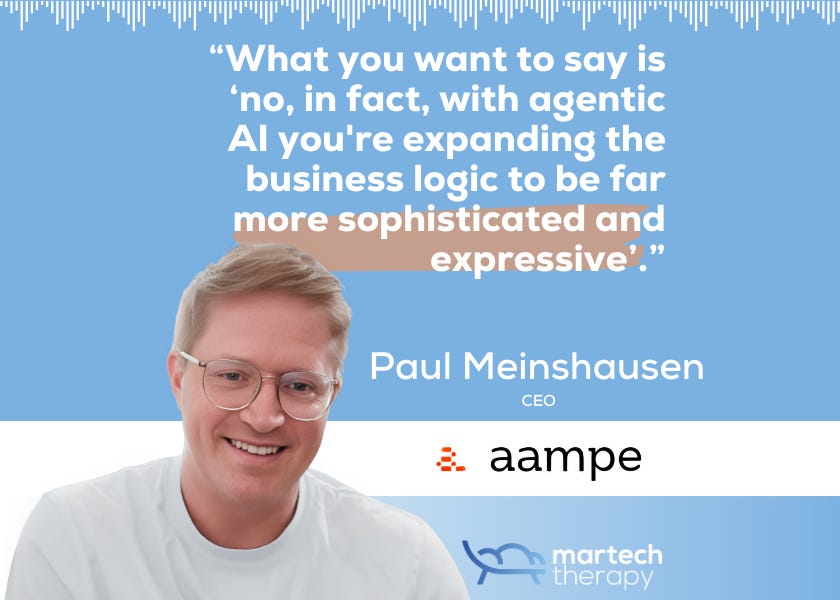
We suggested some new roles worth thinking about:
- copy systems designers
- agent handlers (my Cold War reference... I've read too many spy novels)
- context engineers
These aren't just rebranded versions of existing jobs.
A copy systems designer isn't a copywriter who uses AI. They're someone who designs the logic that determines which message gets delivered in which context to which person.
An agent handler isn't a project manager. They're coordinating multiple autonomous systems that are making decisions faster than humans can review them.
A context engineer is building the frameworks that help AI understand situational variables like weather, location, time of day, and emotional state.
 Matthew Niederberger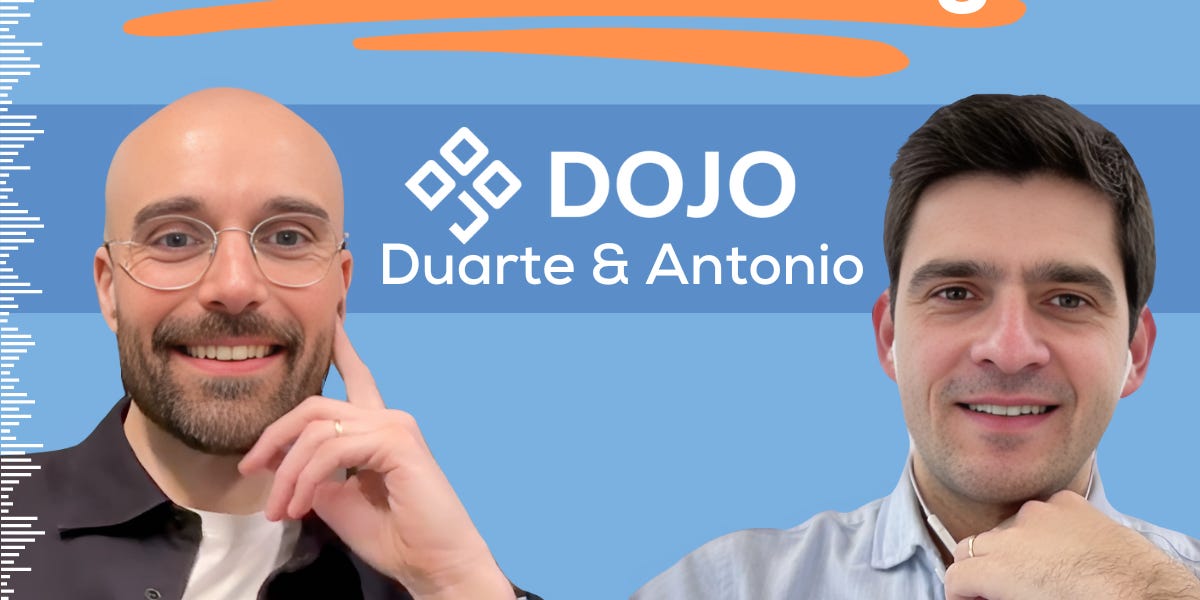
Duarte added another angle I hadn't considered. He thinks AI creates opportunities to bridge functions that were historically siloed. Marketing and sales. Product and go-to-market. These boundaries existed because coordination was expensive and slow. If AI can move information and adjust strategies across those boundaries in real time, the silos stop making sense. That means new roles at the intersections. Not marketing people who learn sales. People who think in terms of integrated growth systems.
The conversation ended with advice for anyone trying to navigate this shift.
Paul's take: do the work. Build something. Simulate solutions. Show up with examples of systems you've designed, not just tasks you've completed.
Duarte's take: position yourself at the intersection of departments where AI is breaking down old barriers. Don't wait for someone to define the role. Define it yourself.
I recorded the full conversation and posted it on YouTube if you want to hear r watch the details. Link below. This is one of those topics where the implications take time to settle. I'm still working through what it means for how I advise companies on CDP implementations and orchestration strategies. Curious if anyone else is seeing this pattern in their own work.
👥 Connect with us on LinkedIn:
- Paul Meinshausen: https://www.linkedin.com/in/paulmeinshausen/
- Duarte Garrido: https://www.linkedin.com/in/duartegarrido/
- Matthew: https://www.linkedin.com/in/matthewniederberger/
📲 Follow Martech Therapy on:
Discussion