


A year ago, I sat in a client meeting looking at their Martech stack in PowerPoint. Boxes, arrows, a few logos. Honestly, it was a decent start. But every change meant someone nudging shapes around, and none of the context behind a tool (who owns it, what it costs, why it's there at all) lived on the slide.
I'd tried Miro and Mural for the same job before.
They didn't cut it either.
So I started building Martech Stack Builder.
Part of it was a bet on my future. Part of it was education, because I like to walk the walk as well as talk the talk, and in this industry you don't get to stop learning. And part of it, to be honest, is that I'm a classic nerd who finds tinkering in tech fun.
I'd just come off a freelance contract building AI agents in n8n for an online recruitment company, and it left me wanting more.
For years I've had ideas in my head and lacked some of the skills to build them. Vibe coding removed that excuse.
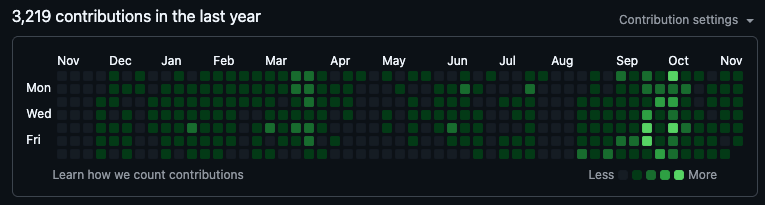
The year, compressed: close to 3,900 commits, about 78% of them co-authored by Claude.
A move from a CDP simulator to a stack builder, from one app to a monorepo, from n8n workflows to edge functions. Around 230 people signed up. The public vendor catalog sits at over 500. And it cost me around $6,000, of which about $1,200 came as free API credits and usage from Anthropic.
Feeding the beast, as I like to call it.
Somewhere along the way, the project also started costing me more than tokens. That's the last section of this article, and it's the one I actually started off writing. The tech comes first because it explains how I got there.
How AI coding tools change the way a solo builder works

The first months were fast. Really fast.
The first commit went in early December 2025, a CDP simulator with a tutorial system. Within a week the playground I'd built inside it had become the main event, and the simulator went into maintenance mode.
The ideas just kept coming.
Supabase came in for auth and data before Christmas. Stripe and an Astro marketing site followed in the first days of January, and releases shipped roughly every two days through that month. Version 1.0 went live in early February with more than 150 vendors.
March was the busiest month of the first half. Then April and May produced 32 commits between them. I'll get to why.
In September I came back properly. Reenergized.
I'd just published a piece about Martech work slowing down, Fable had been released, and it felt like the right moment to revisit the whole thing, logic, UI and UX included.
What I found surprised me.
The earlier work with Opus had left a long list of bugs and inconsistencies, and four design reviews produced 297 findings. I rebuilt the audit logic so a deterministic engine makes the call and the model only explains it. After speaking to some peers, I also hooked the project up properly to GitHub and Actions, which was a good bet.
October came in at 1,514 commits.
About two-thirds of those came from Claude sessions running under a placeholder git identity, not from me at a keyboard, well not in a way you would expect.
On the chart, that's the part that looks like a wall.
Vibe coding security: what an AI-built app gets wrong
I published a piece in January about security stopping being theoretical. I had no idea.
 Matthew Niederberger
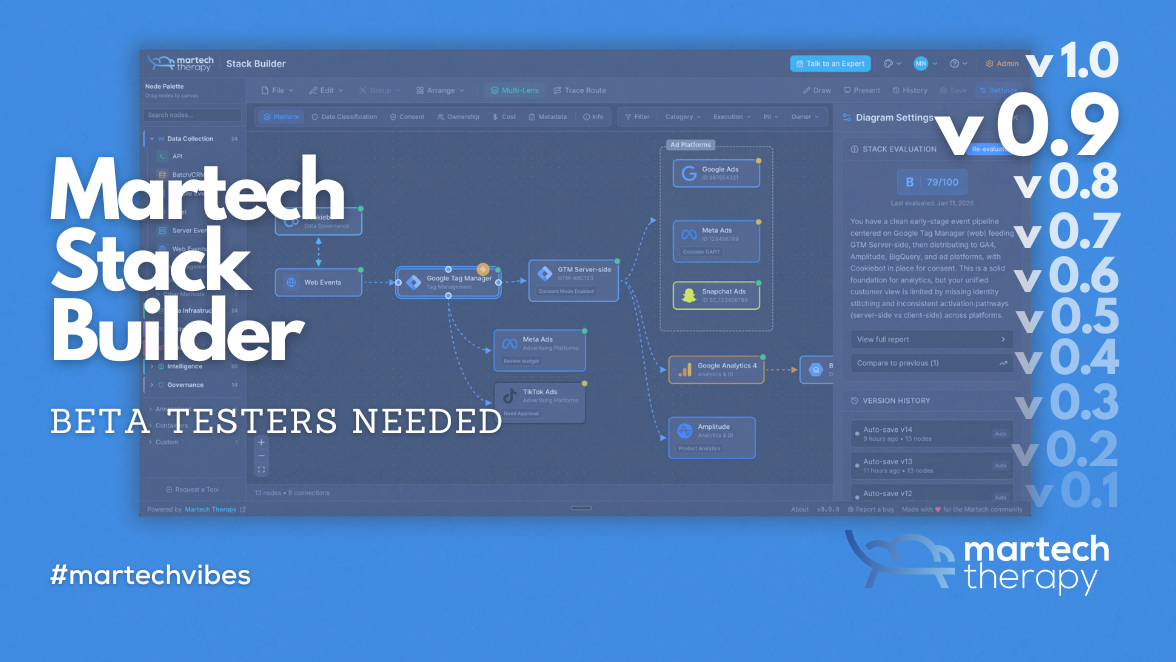
Where this started ⬆️
The pattern over the year was remarkably consistent. Database access rules that were too open or scoped to the wrong thing. Functions that trusted whatever the caller told them about who they were. Secrets that ended up somewhere a browser could read them. None of it is exotic. Common beginner's mistakes. It's the stuff any experienced backend developer would catch, and a solo builder moving fast with a confident AI pair doesn't always know to look.
My personal favorite is a database policy literally named "no data exposed" that… exposed data. The irony does not escape me.
The name said one thing, the rule underneath did another, and the platform's own advisory tool, with roughly 590 warnings to its name, never flagged it. It only came out when I queried the database as an anonymous visitor would.
Another one for posterity… a single developer-tool setting caused an entire set of environment variables, including an email service key, to ship in the public JavaScript bundle. That key was rotated the same day, and a build guard now blocks it from happening a second time.
The lesson I'd pass on is less comforting than it sounds. Almost every issue was found by a deliberate audit, most of them run by Claude itself. None were reported by users or outside researchers.
Ironically enough, the model that writes the hole is quite good at finding it, as long as you ask it to look. If you vibe code something people log into, the audits are your safety net, and they only work if you schedule them.
Keeping AI-generated code clean
This is where I learned that green checkmarks lie.
For months, the lint step in my pre-commit routine had been failing on every run without anyone (me) noticing. The end-to-end suite reported 51 tests passed while silently skipping 15. A file overwrite deleted five tests, including one guarding the brand colors, and every check stayed green. A prompt change lived only in a documentation file for about four months, so the version that shipped never got it. Three parallel agents picked the same database migration version, two days running.
And then there's the bill nobody warns you about. In three weeks of October, agents pushing fix after fix burned through 43,200 billed GitHub Actions minutes. My quota for November is sitting at 90% as I type this 🫠
Each of these became a rule.
The project's instruction file now tells Claude never to overwrite an existing test file, to change every copy of logic that exists in more than one place, to give each parallel agent its own range of migration versions, and to leave cloud jobs to me.
Lint went from 61 errors and 57 warnings to zero, and a ratchet fails the build on anything new. The code is more consistent now than it has ever been.
The model remembers nothing between sessions. The rules file does.
AI never sleeps, but you should
It started early, in February, when the app gained a bit of traction and feedback began coming in. That's when it hit me that AI never sleeps. There was no reason to stop, because the thing on the other side of the screen was always willing to keep working.
A team has natural stopping points: people go home, get tired, push back. On my own, with an agent, there were none.
So I started looking for ways to keep going from anywhere. Including holidays, with the kids there. In hindsight, not my proudest move.
It crept up on me.
Even away from the computer my head stayed full: questions, ideas, security concerns, the next fix. Damn, that sounds sad.
April and May were the first warning.
Four months of building straight through, my creativity dried up, feedback was being processed faster than I could blink, and I stalled.
September pulled me back in, and this time it feels more intense. Part of that is how the tools are packaged.
I'm consider myself an efficient person, which can be both a vice and a virtue, and I'm on the top subscription plan, so I feel like I need to max it out before it resets. Add the free resets and API credits on top, and an unused allowance starts to feel like waste. I mean, I spend my days helping clients spot this exact kind of incentive in their own stacks. Spotting it in my own habits took a lot longer.
The laptop stays open in my office and I log in from the Claude app on my phone. Plenty of people are on their phones all the time, even in my household. Instead of doom scrolling, I doom code 😉
Why not stop?
This is a tough question, but one I can honestly answer.
Because if I'm not doing this, someone else will.
I've always felt the pressure to stay ahead of the curve, and this feels like a real-life game of Last Man Standing. Falling behind is a scary thought, especially if you're someone who has always worked their way up.
But there's also a fun side to it, and that's what makes it harder. Even my hobbies became assisted projects. Drones, long-range mesh comms, ADS-B apps, decoding radio signals: Claude built the software, I sourced and connected the hardware. I guess my wife accepts this eccentricity in me ☺️
All joking aside, here's what it actually cost.
I gave up reading and audiobooks. I'm behind on Silo and Slow Horses, which is borderline criminal. And I missed two events I'd planned to attend, MeasureCamp Brussels and The Martech Summit, because I simply didn't have the energy.
The strangest part is how aware of it I am.
I can see exactly what's happening, while watching better models drop at a pace that makes it feel irresponsible to look away.
A few things help.
My wife picks up on my mood before I do, and she prods until I talk. I've started telling peers, plainly, that my energy is low, and their responses have been supportive.
I'm back at the gym, and swimming in particular feels good, probably because it's the one place a laptop can't follow me. I'm also pointing more of my Claude time at things other than building: exam prep with my daughter, podcast planning, building educational games, and business processes that make me more productive.
And I've had to admit that my real anxiety is losing an idea, not failing to build it on the spot. Capturing a thought takes seconds with a voice note. Building it is what eats the evening and relationships. Those are two different problems, and only one of them needs a laptop.
I don't have this solved. My priorities got mixed up and they need straightening. Hence this article.
Being able to build with one hand shouldn't mean breaking what matters more with the other.
Ideas come and go.
A missed deadline is recoverable. Missing the people around you, family and friends but also peers and confidants, is a different kind of loss.
If some of this sounds familiar, you're not alone. Every day, I'm working out the balance myself, and talking about it openly is what has helped me most so far. So if you're in the same spot, or think you might be heading there, reach out to me. No pitch, no agenda. Just a conversation between two people trying to keep up without losing what matters.
In the end, it is you that matters. Stay safe.
Do you have any questions after reading this article?
Or need support with your Martech projects or just want to chat?
Discussion