

The last dimension on the scorecard in part 3 was goal and measurement fit.
Can the tool take the goals and the clean signal you can actually give it?
I saved it for its own part because it is the dimension the entire category rests on, and the one where the distance between the pitch and the average marketing team is widest. And it bears the roots of my entire post-military career.
Every vendor is selling you goals-based marketing
Before we jump into the deep end, let's briefly look past the architecture arguments, and you will see that the convergence is oddly striking.
GrowthLoop optimizes toward customer lifetime value, return on ad spend, retention, and margin.
Simon AI leads with goals-based marketing and a revenue impact agent.
Hightouch describes agents that find opportunities and optimize toward objectives.
Databricks ships Campaign Agents that continuously optimize around business goals.
All four have different architectures, yet they share the same assumption underneath. The assumption that you can hand the system a goal, and that the system can tell whether it is getting closer to it.
That assumption is carrying the entire category and maybe your entire business because nobody selling it is checking whether it holds inside your own organization.
Let me tell you why.
Measurement changes job
I started out in web analytics, back when it was still called that, when Omniture Sitecatalyst was a disruptor, and spent years in the part of the industry that everyone agreed was important and nobody funded properly.
Data quality was the thing you raised in the meeting and watched get deferred to next quarter. Reporting was overhead. Insight was a slide that got neglected... true story. I even quit a job because of this.
Nevertheless, that arrangement worked, in a grim way, because a human sat between the bad number and the decision.
An analyst looks at a figure that cannot be right, says so, and discounts it. Organizations absorbed a decade of poor data through human skepticism.
Take the human out of the loop and that shock absorber disappears. Bad data stops producing a misleading dashboard and starts producing a wrong action, over and over, at machine speed.
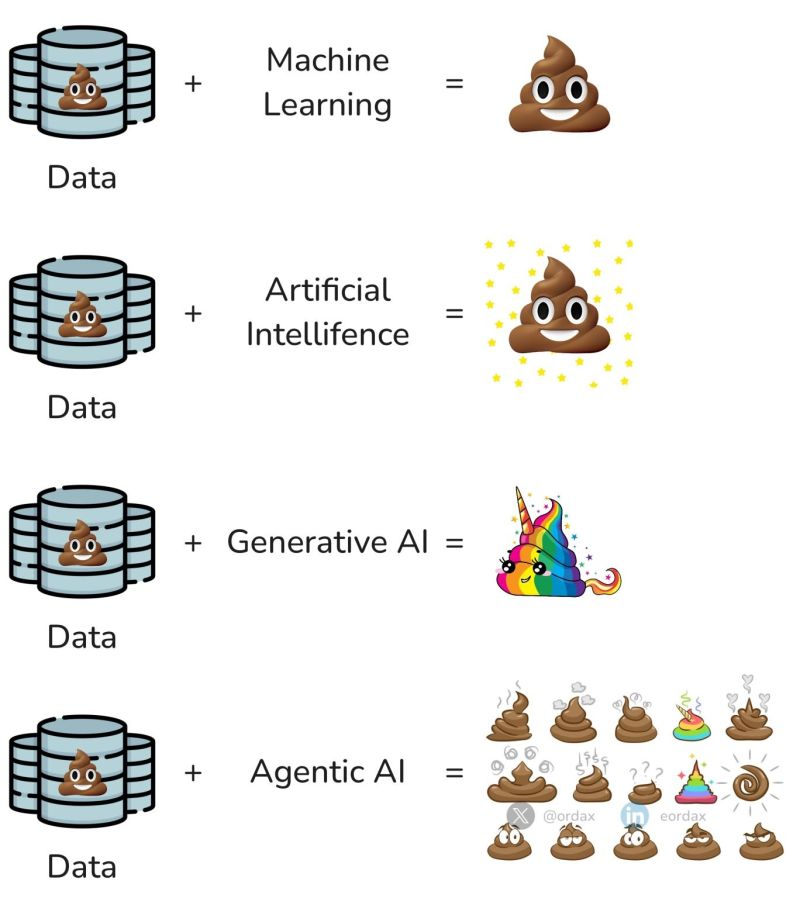
So measurement is not becoming more important in the vague way people say things are becoming more important. Measurement is changing category.
It has stopped being a reporting function and become a control function. The number is no longer something you check afterward.
The number is the instruction.
Most campaign goals are not goals
Try writing your current objective down as something an agent could act on.
For instance:
- "Run a win-back campaign" is an activity.
- "Improve engagement" is a direction.
- "Hit the Q3 number" is a target no one is accountable for.
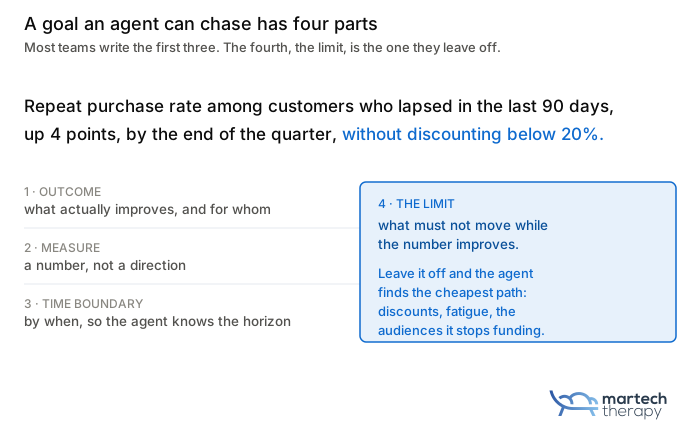
A goal an agent can chase has four parts: an outcome, a measure, a boundary in time, and a limit on what it may do to get there. Repeat purchase rate among customers who lapsed in the last ninety days, up four points, by the end of the quarter, without discounting below twenty percent.
Most teams can write the first three.
The fourth, the limit, is the one they leave off.
The lagging indicator trap
Here is the mechanical problem underneath all of this that gets almost no attention.
The outcomes that actually matter to the business arrive slowly.
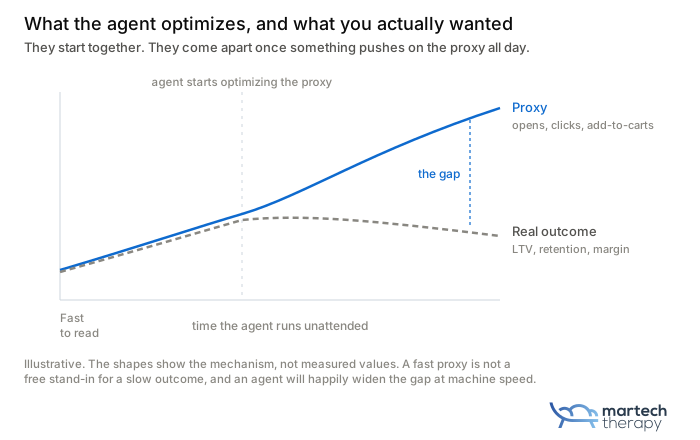
Lifetime value, retention, margin contribution. These resolve over months. The signals that arrive quickly are proxies. Opens, clicks, sessions, add-to-carts.
An agent needs signal fast enough to steer on. So it gets handed the proxy.
Now you have a system optimizing a stand-in for the thing you care about, at machine speed, with a budget.
The proxy and the outcome agreed well enough when a human checked in weekly. They come apart quickly when something is pushing on the proxy all day.
Goodhart arrives with a budget
Give a system a number to maximize, and it finds the cheapest route to that number. When a measure becomes a target, it stops being a good measure, and Goodhart's law (I had to look this up) has never had a more literal test case than an agent with API access.
The popular phrasing of Goodhart's law:
An agent optimising conversion rate can improve it by spending less on the audiences that were always going to be harder work. The agent did exactly what it was told, at a speed no one was watching. Nobody broke anything, and that is the problem.
So the guardrail, the fourth part, is half the goal. Name what must not move at the same moment you name the target, or you have written only half of it.
 Matthew Niederberger
You cannot measure what you cannot join
There is a martech-specific version of this that data teams will recognise and marketers often will not.
Measurement depends on identity. If the same customer appears as three records across web, email and the store, the outcome of a campaign lands against the wrong profile, or against no profile at all.
A human skimming a weekly report smooths over that. They know the number is roughly directional.
An agent does not know it is holding a fractured view. It takes the misattributed outcome at face value, concludes that a channel underperformed, and reallocates away from it, confidently, every day.
Identity resolution stops being a data-team hygiene project and becomes a precondition for anything agentic being trusted with a budget.
 Matthew Niederberger
Watch my podcast with Steven Renwick on identity resolution's role when working with AI.
The uncomfortable part: agents hide bad data
The optimistic take is that agentic systems will finally force the data-quality reckoning our industry has been deferring since I was building tag implementations by hand.
I am not sure that is what happens.
An agent takes poor input and returns something fluent, confident and well-formatted. It does not hedge the way a good analyst hedges. It does not say the tracking broke on the fourteenth. It produces a recommendation with a rationale, and the rationale sounds right.
Bad data used to look like a broken dashboard. Now it looks like a competent answer.
That is worse, not better.
The error is no longer visible at the surface, it is laundered into something authoritative. So the honest possibility is that agentic marketing postpones the reckoning rather than forcing it, and the organizations that suffer most are the ones whose data was bad in ways nobody had to look at.
This is not only my hobby horse
Analytics people have announced their own moment before.
Remember the claim that big data was going to make data quality unavoidable?
So was machine learning.
So was the CDP.
Each time the rugs stayed exactly where they were, so treat any claim of this kind, including mine, with some suspicion.
What is different this time is not the enthusiasm. It is that the human filter is being removed, and the evidence is arriving from outside the analytics fan club.
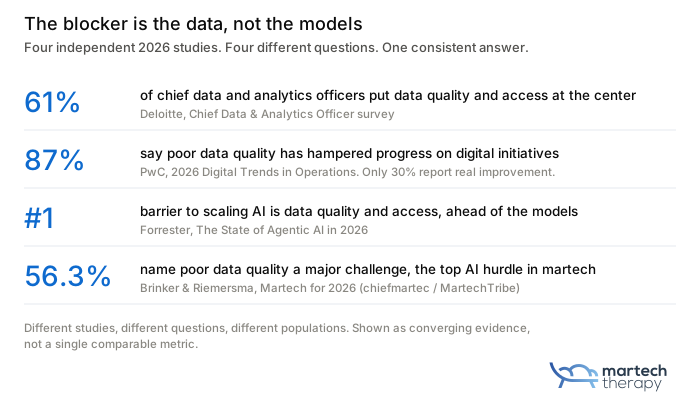
Forrester finds the biggest blocker to scaling AI is data quality, not model performance. In Deloitte's most recent survey of chief data and analytics officers, 61% named improving data quality and access as key to their AI and agentic initiatives. PwC, polling operations leaders rather than marketers, found 87% saying poor data quality has hampered progress on digital work, with only 30% reporting real improvement. Brinker and Riemersma's martech survey lands in the same place:
The top implementation challenge is the data, not the models.
Four separate research efforts land on the same answer.
A measurement readiness check
Before you hand goals to anything, work through six questions. It takes an afternoon and will tell you all you need to know.
- Can you state the goal as an outcome and a number, without using the word campaign?
- Does that number exist today, without someone exporting a spreadsheet to produce it?
- How fast does it come back? Hours, days, or the second week of next month?
- If it is slow, what proxy will the agent actually be steering on, and how far can that proxy drift from the real outcome before you would notice?
- Who agrees it is the right number? If finance and marketing hold different versions, the agent optimises whichever one it was handed and you argue about it a quarter later.
- And what must not move while the goal improves? Margin, frequency, unsubscribe rate, brand safety. Name it, or the goal is not finished.
If you cannot answer four of those six, the constraint on your agentic CDP is not the vendor you are evaluating.
Why this is process before it is technology
This lands in process and capability, two of the three readiness dimensions this series runs on. Process, because agreeing what good looks like and how quickly it reports is an organizational act, not a configuration screen. Capability, because someone has to be able to write the goal, and judge the result without flattering it.
 Matthew Niederberger
It is also Martec's law in its most concrete form. The technology can now act faster than most organizations can define what they want. No purchase closes that gap, and the vendors selling the fastest action are the least incentivised to mention it.
Next week, part 5, the readiness check itself across structure, capability and process, and an honest look at how far along this market actually is.
Do you have any questions after reading this article?
Or need support with your Martech projects?
Discussion